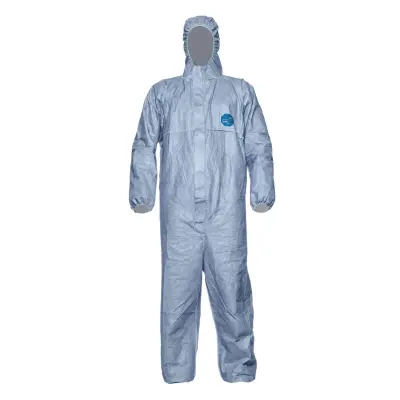
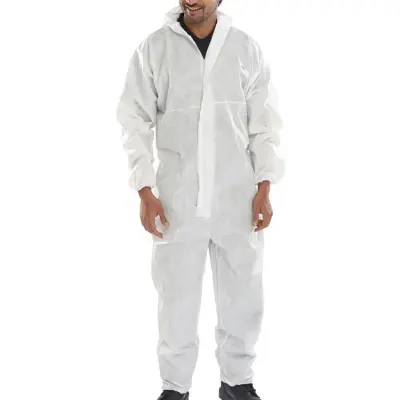
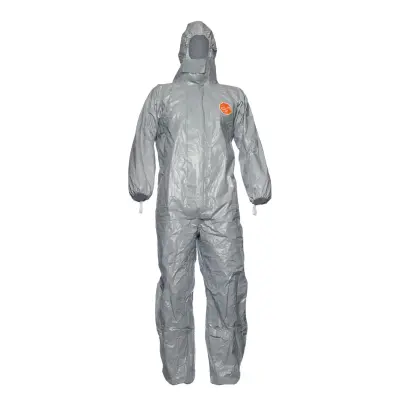
Disposable and chemical protective coveralls are classified into Types, from Type 1 (the most protective) to Type 6 (the least). Each Type is a test of the whole garment — seams, zips and closures included — against a particular kind of exposure. Most suits carry more than one Type, for example Type 5/6.
| Type | Protects against | Standard |
|---|---|---|
| Type 1 | Gases and vapours: fully gas-tight suits | EN 943-1 |
| Type 3 | Liquid jets: strong, directional sprays of liquid chemicals | EN 14605 |
| Type 4 | Liquid spray: saturating sprays of liquid chemicals | EN 14605 |
| Type 5 | Hazardous dry particles (airborne dust and fibres) | EN ISO 13982-1 |
| Type 6 | Light spray, liquid aerosols and low-volume splashes | EN 13034 |
Type 2 used to describe non-gas-tight suits, but it is no longer specified in the current edition of EN 943-1. Partial-body garments such as aprons and sleeves can be certified too, marked PB with the Type, for example PB [6].
Extra marks you will see
- -B after a Type (for example Type 5-B/6-B): the garment also meets EN 14126 for protection against infective agents.
- EN 1149-5: antistatic. The wearer must be properly earthed for it to work — through suitable footwear, for example.
- EN 1073-2: protection against radioactive particle contamination. It is not protection against radiation itself.
- EN ISO 14116 index 1: limited flame spread. Most disposable coveralls are polyethylene or polypropylene and are not flame-retardant — they can melt — so keep them away from hot work unless they carry this mark.
Choosing the right Type
- Dust, fibres, insulation and dirty jobs: Type 5/6 — for example the Tyvek 500 Xpert or a microporous Type 5/6 coverall.
- Asbestos: HSE guidance calls for disposable Type 5 coveralls, worn one size too big to avoid ripping at the seams.
- Spraying paints, pesticides or cleaning chemicals: Type 6 for light mist, Type 4 where the spray will soak the suit.
- Chemicals under pressure or real splashing: Type 3, chosen against the permeation data for your specific chemical — the Tychem 6000 F publishes this per chemical.
- Visitors, food areas and clean jobs: a basic polypropylene coverall or visitor coat may be enough where there is no hazard — but these usually carry no Type rating, so they are not PPE.
The Type is a test of the whole suit; chemical permeation is a separate test of the fabric against each substance. For chemical work you need both: the right Type and acceptable permeation data for what you handle. Our disposable PPE range covers Type 3 to Type 6.
This is general guidance. Choose protective clothing from your COSHH assessment, and follow the manufacturer’s data for the specific chemicals and tasks involved.
Frequently asked questions
- What is the difference between Type 5 and Type 6 coveralls?
- Type 5 protects against hazardous airborne dry particles such as dust and fibres. Type 6 protects against light liquid spray and low-volume splashes. Many coveralls are certified to both.
- Is a Type 5/6 coverall waterproof?
- No. Type 6 covers light spray and small splashes only. For saturating spray you need Type 4, and for liquid jets Type 3.
- What does -B mean on a coverall?
- The garment also meets EN 14126 for protection against infective agents, for example Type 5-B or Type 4-B.
- Which coverall should I use for asbestos?
- HSE guidance calls for disposable Type 5 coveralls. Wear them one size too big so they do not rip at the seams.
- Are disposable coveralls flame-retardant?
- Usually not. Most are polyethylene or polypropylene and can melt. Only use one near heat or flame if it carries EN ISO 14116 limited flame spread.