Most spills are small and are cleaned up in minutes. The ones that cause harm are usually the ones where nobody knew what to do: the wrong absorbent, a spill that reached a drain, or someone who waded in without gloves. A short written procedure, the right kit nearby and staff who have practised it prevent nearly all of that.
The 10 steps
| Step | What to do |
|---|---|
| 1. Stop and assess | Check nobody is hurt, keep people back, and follow your site’s spill plan. |
| 2. Identify the liquid | Find out what has spilled and how dangerous it is. The label and safety data sheet tell you. |
| 3. Get help if needed | If it is too big or too hazardous to handle safely, clear the area and call for help. Do not take the risk. |
| 4. Put on PPE | Wear the gloves, eye protection and any other PPE the safety data sheet calls for before you go near it. |
| 5. Stop the source | If it is safe, close the valve, stand the container up or plug the leak, at the source or as close to it as you can. |
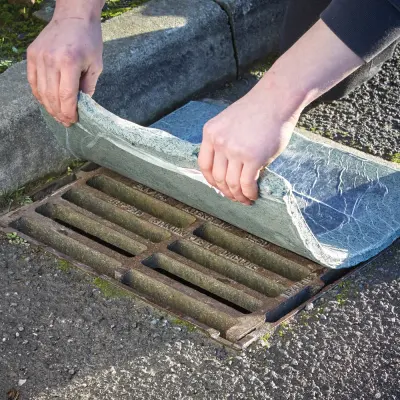
| 6. Contain it | Stop it spreading with absorbent socks laid in a ring. Outside, cover nearby drains with a drain mat or cover first. |
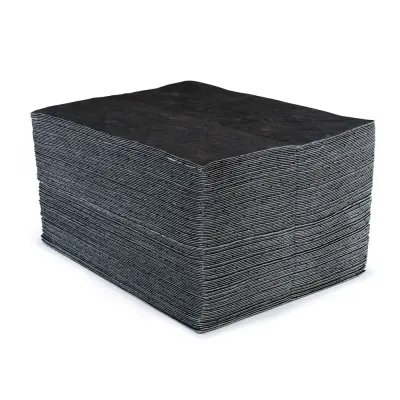
| 7. Clean up | Once it is contained, soak it up with pads, pillows or granules of the right colour, working from the edge inwards. |
| 8. Bag, label and dispose | Bag used absorbents and contaminated PPE, label them with what they contain, and dispose of them correctly. Clean the area and any tools. |
| 9. Restock | Replace everything you used so the kit is ready for the next one. |
| 10. Review | Write down what happened, how the response went and what would stop it happening again, then act on it. |
What UK law expects
- COSHH: if you use hazardous substances, the Control of Substances Hazardous to Health Regulations 2002 require you to plan for accidents and emergencies, including spills, with the right equipment ready and staff who know how to use it.
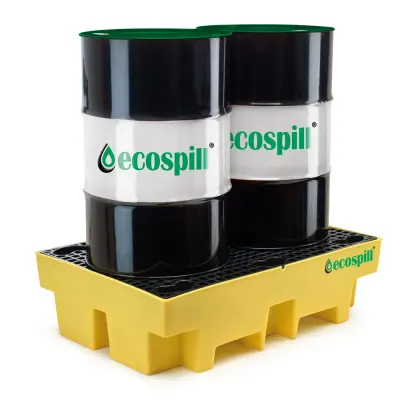
- Oil storage: in England and Wales, a business storing oil in any container of 201 litres or more (a standard 205-litre drum counts) needs secondary containment, such as a bund or spill pallet, that holds at least 110% of the container. Scotland and Northern Ireland have their own oil storage rules along the same lines.
- Drains and water: most surface-water drains run straight to a stream or river, so a spill reaching one is a pollution incident. Protect drains first, and if a spill does get into a drain, watercourse or the ground, report it on the free environmental incident hotline, 0800 80 70 60.
- Waste: you have a duty of care to dispose of waste legally. Absorbents take on the hazards of what they soaked up, so pads full of oil or chemicals are usually hazardous waste and cannot go in the general skip. Use a licensed waste carrier.
Keeping kits ready
- Check every kit on a set schedule (monthly is common) and after every use: is it complete, dry and undamaged, and is the PPE still in date?
- A numbered tamper tag on the lid shows at a glance whether a kit has been opened since the last check.
- Run a practice spill now and then. People who have laid a sock ring once will do it faster when it matters.
- Re-check your kits whenever you start storing a new liquid: it may need a different colour or a bigger kit.
Not sure which kit goes where? See how to choose a spill kit for colours, formats and sizing.
Frequently asked questions
- What is the first thing to do when there is a spill?
- Stop and assess: make sure nobody is hurt, keep people away, and identify what has spilled before you approach it. Then put on the right PPE before containing it.
- Is a spill kit a legal requirement?
- There is no single law that names spill kits, but COSHH requires emergency arrangements for hazardous substances and environmental law makes you responsible for preventing pollution. In practice, a suitable spill kit is how most sites meet both.
- How do you dispose of used spill absorbents?
- Bag and label them with what they absorbed. Absorbents contaminated with oil or chemicals are usually hazardous waste, so they must go to a licensed waste carrier rather than the general skip.
- How much must an oil bund or spill pallet hold?
- In England and Wales, a bund or spill pallet for business oil storage in containers of 201 litres or more must hold at least 110% of the container. Scotland and Northern Ireland have their own, similar rules.
- How often should spill kits be checked?
- Check them on a regular schedule, monthly is common, and always after use, so they are complete and ready. A tamper tag makes it obvious if a kit has been opened.